Table Of Content
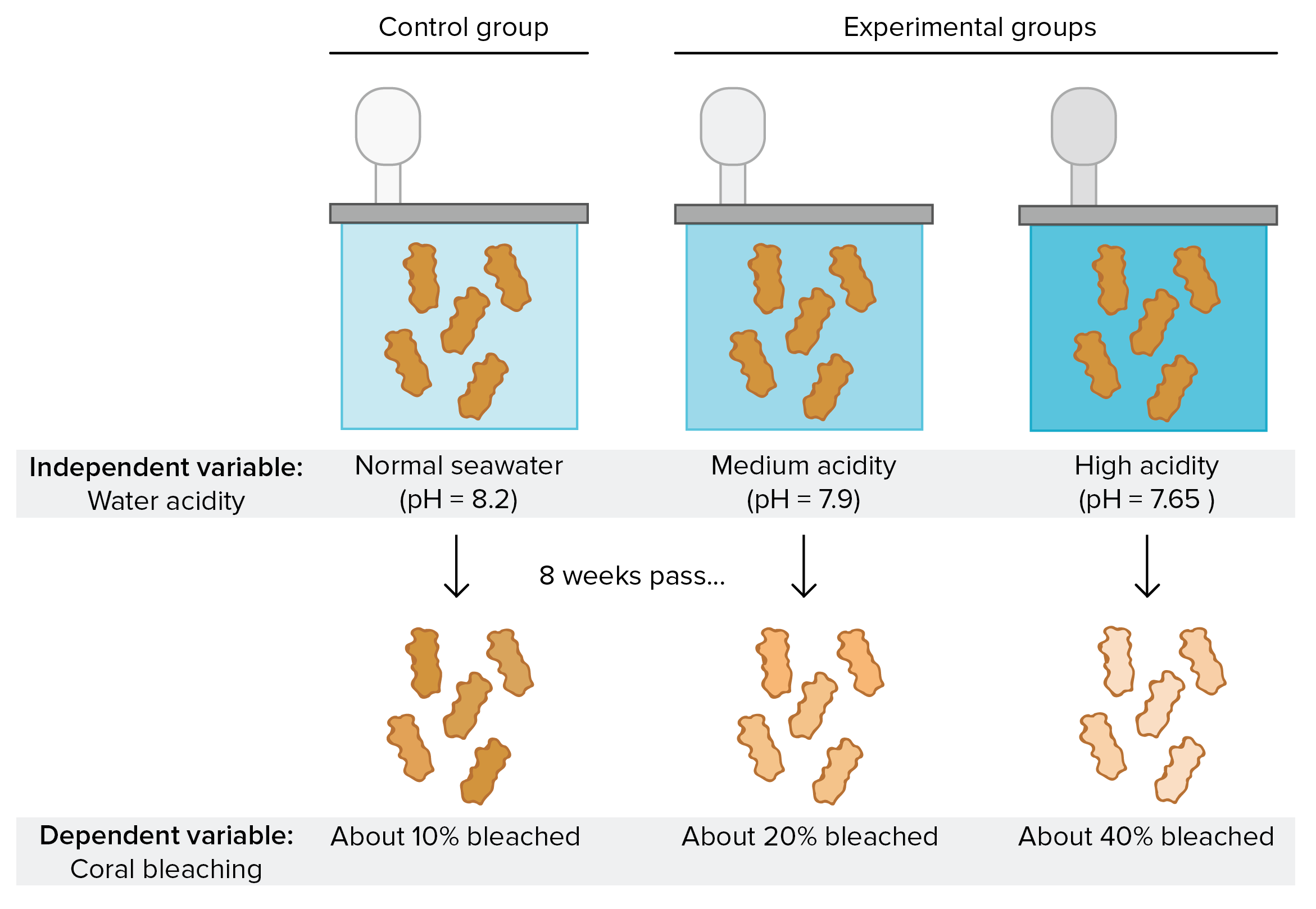
The control group tells us what would have happened to your test subjects without any experimental intervention. First, you may need to decide how widely to vary your independent variable. Experimental research is often the final form of a study conducted in the research process which is considered to provide conclusive and specific results. It involves a lot of resources, time, and money and is not easy to conduct, unless a foundation of research is built. Yet it is widely used in research institutes and commercial industries, for its most conclusive results in the scientific approach.
Types of Experimental Research Designs
Finally, you need to decide how you’ll collect data on your dependent variable outcomes. You should aim for reliable and valid measurements that minimise bias or error. Use arrows to show the possible relationships between variables and include signs to show the expected direction of the relationships. Your research design must include ways to minimize any risk for your participants and also address the research problem or question at hand. If you cannot manage the ethical norms along with your research study, your research objectives and validity could be questioned.
True Experimental Research Design
How do I design research for an experimental research design in the marketing and tourism field? - ResearchGate
How do I design research for an experimental research design in the marketing and tourism field?.
Posted: Thu, 01 Dec 2022 08:00:00 GMT [source]
There are several actions that could trigger this block including submitting a certain word or phrase, a SQL command or malformed data.
When Can a Researcher Conduct Experimental Research?
It can be difficult to separate the true effect of the independent variable from the effect of the confounding variable. Experimental designs are a set of procedures that you plan in order to examine the relationship between variables that interest you. How precisely you measure your dependent variable also affects the kinds of statistical analysis you can use on your data. How you manipulate the independent variable can affect the experiment’s external validity – that is, the extent to which the results can be generalised and applied to the broader world.
Frequently Asked Questions
Others may need to be operationalised to turn them into measurable observations. In medical or social research, you might also use matched pairs within your between-subjects design to make sure that each treatment group contains the same variety of test subjects in the same proportions. Then you need to think about possible extraneous and confounding variables and consider how you might control them in your experiment.
Study designs: Part 1 – An overview and classification
How you apply your experimental treatments to your test subjects is crucial for obtaining valid and reliable results. To translate your research question into an experimental hypothesis, you need to define the main variables and make predictions about how they are related. By creating a research design, a researcher is also giving oneself time to organize the research, set up relevant boundaries for the study, and increase the reliability of the results. If any part of the research design is flawed, it will reflect on the quality of the results derived. Some variables, like temperature, can be objectively measured with scientific instruments.
Variable
Observational studies can be either descriptive (nonanalytical) or analytical (inferential) – this is discussed later in this article. In your research design, it’s important to identify potential confounding variables and plan how you will reduce their impact. Each group receives a different level of the treatment (e.g. no phone use, low phone use, high phone use). Now that you have a strong conceptual understanding of the system you are studying, you should be able to write a specific, testable hypothesis that addresses your research question. By comparing their outcomes in biochemical tests, the researcher can confirm that the changes in the plants were due to the sunlight and not the other variables.
In a within-subjects design, each participant experiences all conditions, and researchers test the same participants repeatedly for differences between conditions. In a between-subjects design, every participant experiences only one condition, and researchers assess group differences between participants in various conditions. A confounding variable is related to both the supposed cause and the supposed effect of the study.
The research problem statement must be clear and to do that, you must set the framework for the development of research questions that address the core problems. The classification of the research subjects, conditions, or groups determines the type of research design to be used. Experimental research helps a researcher gather the necessary data for making better research decisions and determining the facts of a research study. If your study system doesn’t match these criteria, there are other types of research you can use to answer your research question. Experimental research design lay the foundation of a research and structures the research to establish quality decision making process. There is no order to this list, and any one of these issues can seriously compromise the quality of your research.
Experimental designs will have a treatment condition applied to at least a portion of participants. In a between-subjects design (also known as an independent measures design or classic ANOVA design), individuals receive only one of the possible levels of an experimental treatment. To publish significant results, choosing a quality research design forms the foundation to build the research study. Moreover, effective research design helps establish quality decision-making procedures, structures the research to lead to easier data analysis, and addresses the main research question. Therefore, it is essential to cater undivided attention and time to create an experimental research design before beginning the practical experiment. A variable represents a measurable attribute that varies across study units, for example, individual participants in a study, or at times even when measured in an individual person over time.
An experimental design where treatments aren’t randomly assigned is called a quasi-experimental design. These are pre-experimental research design, true experimental research design, and quasi experimental research design. Interventional studies are experiments where the researcher actively performs an intervention in some or all members of a group of participants. This intervention could take many forms – for example, administration of a drug or vaccine, performance of a diagnostic or therapeutic procedure, and introduction of an educational tool. For example, a study could randomly assign persons to receive aspirin or placebo for a specific duration and assess the effect on the risk of developing cerebrovascular events. The key difference between observational studies and experiments is that, done correctly, an observational study will never influence the responses or behaviours of participants.
Randomization is important in an experimental research because it ensures unbiased results of the experiment. It also measures the cause-effect relationship on a particular group of interest. You should anticipate and incorporate those limitations into your conclusion, as well as the basic research design. Include a statement in your manuscript about any perceived limitations, and how you considered them while designing your experiment and drawing the conclusion. Usually, researchers miss out on checking if their hypothesis is logical to be tested. If your research design does not have basic assumptions or postulates, then it is fundamentally flawed and you need to rework on your research framework.
Experimental research design is a framework of protocols and procedures created to conduct experimental research with a scientific approach using two sets of variables. Herein, the first set of variables acts as a constant, used to measure the differences of the second set. The best example of experimental research methods is quantitative research.
An experimental research design helps researchers execute their research objectives with more clarity and transparency. The terms “prospective” versus “retrospective” studies can be confusing. To him/her, the process of enrolling cases and controls over a period of several months appears prospective. Or, at the very least, one must be clear that the terms relate to work flow for each individual study participant, and not to the study as a whole. There are some terms that are used frequently while classifying study designs which are described in the following sections.
Some examples of variables include age, sex, weight, height, health status, alive/dead, diseased/healthy, annual income, smoking yes/no, and treated/untreated. Research study designs are of many types, each with its advantages and limitations. The type of study design used to answer a particular research question is determined by the nature of question, the goal of research, and the availability of resources. Since the design of a study can affect the validity of its results, it is important to understand the different types of study designs and their strengths and limitations. In a within-subjects design (also known as a repeated measures design), every individual receives each of the experimental treatments consecutively, and their responses to each treatment are measured.
Second, you may need to choose how finely to vary your independent variable. Sometimes this choice is made for you by your experimental system, but often you will need to decide, and this will affect how much you can infer from your results. You manipulate one or more independent variables and measure their effect on one or more dependent variables. Experimental research establishes a cause-effect relationship by testing a theory or hypothesis using experimental groups or control variables. In contrast, descriptive research describes a study or a topic by defining the variables under it and answering the questions related to the same. In this article, we will not only discuss the key aspects of experimental research designs but also the issues to avoid and problems to resolve while designing your research study.